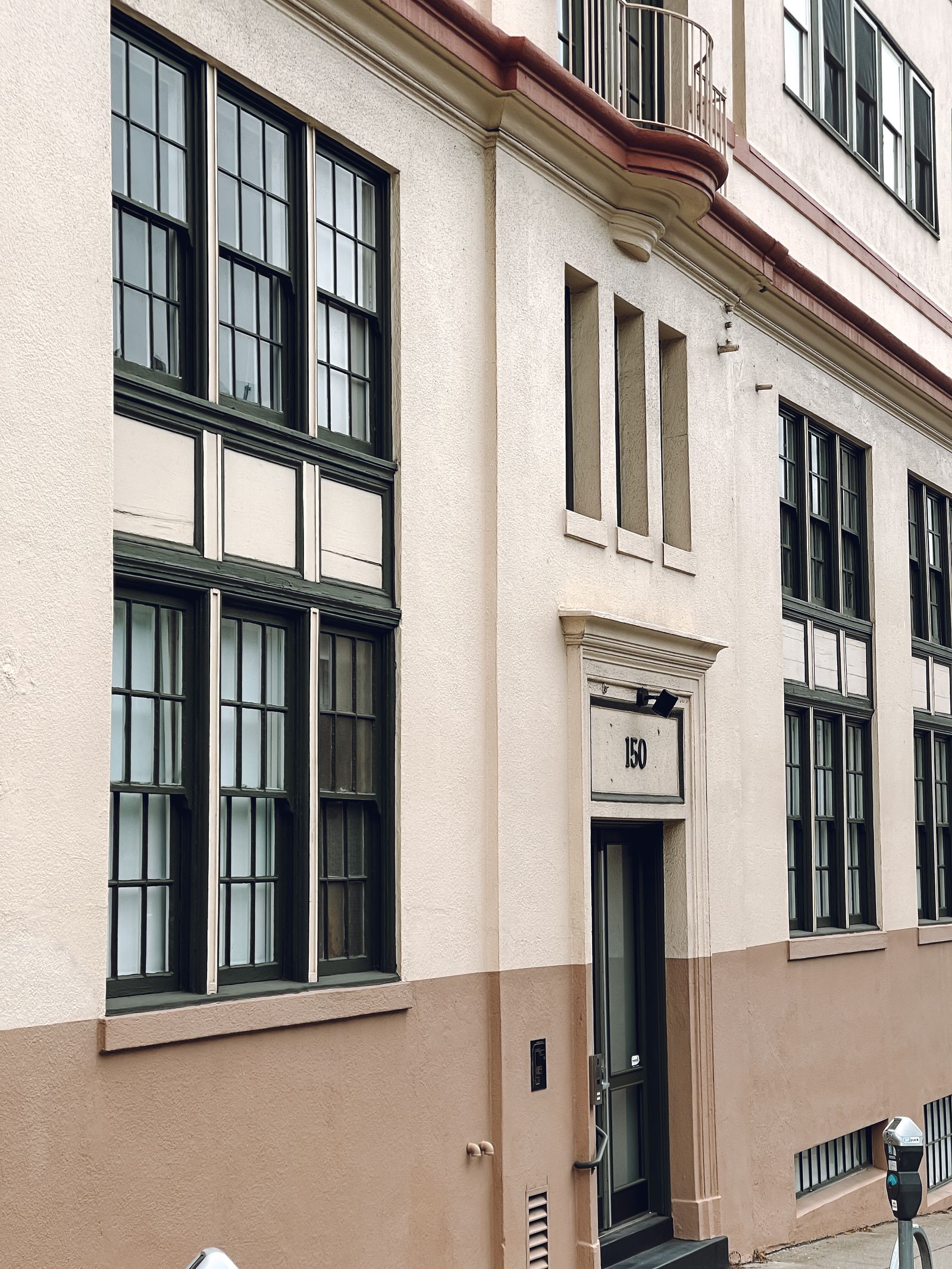
Read the Stamford facade before choosing a treatment
A Stamford property may combine brick and mortar with precast concrete, natural or manufactured stone, EIFS, stucco, painted panels, metal trim, curtain wall glass, storefronts, canopies, and repaired sections. A Harbor Point office or apartment building may have glass, balconies, podium walls, loading areas, and resident or employee arrivals. An older Downtown building may have delicate mortar, cornices, recessed entries, and sidewalks that leave little room for hose or lift staging. A clinic on West Main Street or a retail property along Route 1 may add signage, parking movements, accessible routes, and door traffic to the scope.
Soft washing can fit selected algae, mildew-like growth, pollen, bird residue, and atmospheric film when the substrate and chemistry are compatible. Lower pressure does not make an unknown surface automatically safe. The crew still needs to identify the deposit, protect glass and landscaping, control dwell and overspray, and check the dry result. Black streaks may be organic growth, soot, road film, salt, mineral scale, oxidation, runoff, or coating failure. The proposal should separate routine washing from repointing, spalling repair, flashing work, leak investigation, window restoration, paint replacement, and historic preservation.
- Map brick, mortar, stone, concrete, EIFS, glass, metal, painted, and coated zones.
- Distinguish organic growth from salt, soot, mineral scale, oxidation, and failed coatings.
- Use a test area where older masonry, mixed repairs, or uncertain deposits change the risk.
- State the expected improvement and the conditions that need another specialist.
Account for Long Island Sound air and Stamford runoff
Stamford's waterfront exposure is not uniform. Harbor Point, the South End, Shippan, Cove Island, and properties near the Mill River can experience salt-laden air, humidity, wind-driven rain, and damp shaded elevations. A facade beside I-95, Route 1, Washington Boulevard, Tresser Boulevard, or Atlantic Street may accumulate exhaust, dust, splashback, and delivery residue. Lower walls around parking decks, garage ramps, loading docks, and curb lines often soil differently from upper elevations. A maintenance plan should record which faces see water, traffic, shade, sea air, or shelter instead of assigning every elevation the same frequency.
Before washing, identify catch basins, curb lines, basement doors, garage entries, planted beds, neighboring storefronts, parked vehicles, loading areas, and the direction water could travel toward the Mill or Mianus River systems. Loosened soil, salt, and cleaning solution should not be pushed toward a drain by assumption. The work plan may require protection, diversion, collection, recovery, reduced rinse volume, or coordination with the property and responsible authority. A complete closeout includes clear sidewalks, protected plantings, clean drain areas, and notes about deposits that need specialty treatment rather than a stronger rinse.

Plan around offices, healthcare, hospitality, and tenants
Stamford's commercial schedule changes by district and property type. Downtown and Harbor Point offices have employee arrival peaks, tenant events, food service, deliveries, and garage traffic. Stamford Hospital and medical offices bring patient drop-offs, accessible routes, emergency access, ambulance movement, air intakes, and rooms where disruption matters. Hotels, restaurants, and apartments have guest arrivals, outdoor seating, resident notices, and appearance standards that do not match an empty warehouse. Schools and campuses add class changes, athletics, buses, and after-hours security. A West Side industrial property may instead revolve around trucks, loading doors, shifts, and badges.
The work sequence should name entrances, accessible paths, delivery windows, outdoor seating, tenant communications, security requirements, air intakes, emergency routes, and the person who can pause the work. One side of a building may be cleaned while the principal lobby stays open. A hotel can prioritize a guest-facing elevation before check-in. A campus can be phased building by building. Clear barriers, hose routing, spotters, stop conditions, and handback checks allow the property manager to approve a workable window instead of hoping a generic appointment will fit the site.
Use Stamford weather and access limits in the proposal
Stamford's humid summers, spring pollen, autumn leaf debris, coastal wind, rain, snow, ice, and freeze-thaw cycles affect dwell time, drying, access, and appearance. Deicing residue gathers around entrances, parking structures, ramps, and lower masonry. A shaded wall in Glenbrook or Springdale may stay damp longer than a sun-exposed elevation in Harbor Point. Winter conditions can leave water in vulnerable joints or make public paths slick. The scope should include a realistic appearance standard and weather window for the actual facade, not a promise based on a calendar date alone.
Rain, thunderstorms, lightning, gusts, fog, ice, freezing temperatures, poor visibility, and active pedestrian movement can affect spray control, hose handling, lift use, and aerial stability. The crew may divide a large elevation into zones, protect entries, verify conditions before each shift, and inspect completed areas after the surface dries. Work should pause when wind, lightning, precipitation, temperature, visibility, or public safety no longer support the plan. Remaining deposits and repair needs should be documented rather than concealed by an aggressive rinse.
Match access to each Stamford elevation
Drone-assisted wetting or rinsing may support suitable broad upper walls, parapets, ledges, and roofline zones when wind, stand-off distance, line of sight, airspace, launch space, water supply, and ground controls are workable. It is an access option, not a guarantee for every Stamford site. Harbor Point construction, overhead wires, cranes, trees, signs, active sidewalks, traffic, events, rail infrastructure, and neighboring properties can make one elevation feasible and another unsuitable. Glass, window frames, awnings, balconies, cornices, canopies, and detailed entries may still need poles, lifts, or hand work.
Commercial drone operations must follow applicable Federal Aviation Administration requirements and obtain any needed authorization; property permission does not replace aviation rules. The scope should identify aerial zones, spotters, communications, emergency stop procedures, public separation, and the alternate method if wind, airspace, traffic, or finish requirements change. A hybrid plan can work well for a Stamford office, hospital, hotel, apartment, warehouse, school, or mixed-use building. The customer should know which areas are expected to be assisted from the air and which require contact access before approving the quote.
Request a quote that makes the Stamford work decision easy
A useful commercial soft-washing proposal should identify target elevations, materials, visible deposits, access by zone, operating restrictions, weather limits, water assumptions, drainage controls, protection measures, intended finish, exclusions, and closeout documentation. It should separate broad facade washing from high-detail glass, salt or mineral residue, soot, oxidation, canopies, roofline details, and masonry repair. If aerial assistance is proposed, the scope should explain where it is expected to help and what backup method applies if wind, airspace, public movement, or finish requirements change.
Send the Stamford address, wide and close photos, approximate height, priority elevations, known materials, visible deposits, preferred dates, water access, nearby drains, parking or loading restrictions, and requirements involving patients, guests, employees, tenants, deliveries, traffic, security, or historic details. We can discuss a one-time appearance improvement, a phased office or hotel project, a Harbor Point or South End mixed-use property, an industrial facade, or recurring exterior maintenance. Call +1 239-351-2897, email contact@dronebuildingcleaners.com, or use the quote form to begin.